Tuesday, July 26, 2011

Slaugther in Norway and the Death Penalty: Thai reaction


สังหารหมู่ในนอรเวย์ กับการไม่ลงโทษประหารชีวิต

สมศรี หาญอนันทสุข
สมาชิก แอมเนสตี้ อินเตอร์เนชั่นแนล ประเทศไทย

การละเบิดที่กรุงออสโล และการสังหารหมู่อย่างโหดเหี้ยมที่เกาะอูโทยาในวันที่ 22 กรกฏาคม ที่ผ่านมา เป็นข่าวสะเทือนขวัญไปทั่วโลก และเป็นเหตุการณ์ที่ยอมรับกันไม่ได้ ไม่ว่าใครจะอยู่เบื้องหลังการกระทำของชายคนร้ายวัย 32 ปี หรือจะมีกี่คนที่ร่วมมือในการโจมตีครั้งนี้ เหตุการณ์ดังกล่าวหากเกิดขึ้นในประเทศไทย และหากชายผู้นี้เป็นคนไทยที่ก่อคดี แล้วถูกจับได้ในเมืองไทย คงถูกศาลเตี้ยรุมประชาทัณฑ์ จนครอบครัวต้องย้ายบ้านหนีไปแล้ว

คนไทยที่อ่านหรือดูข่าวนี้ คงตกใจไม่แพ้ชาวต่างชาติ ซึ่งกำลังติดตามอย่างใจจดใจจ่อเพราะอยากจะรู้ว่าอะไรที่ทำให้คทาชายชาวนอรเวย์ผู้นี้ต้องลงมือวางระเบิด ยิงสังหารหมู่ อย่างเลือดเย็นมากๆ ที่ผ่านมาสื่อมวลชนไทยหลายแขนงวิพากษ์วิจารณ์ และบางคนลุ้นให้มีการลงโทษประหารชีวิต รวมทั้งสื่อที่ไร้คุณภาพบางแขนง เชื่อว่าประเทศนอรเวย์จะลงโทษคนคนนี้ดังเช่นที่หลายประเทศ (รวมถึงประเทศไทย) มีแนวโน้มจะกระทำกัน ที่หนักไปกว่านั้นผู้เขียนได้ฟังผู้อ่านข่าวสองท่านเมื่อวันอาทิตย์ที่ผ่านมาซึ่งพูดอย่างสะใจว่า ประเทศนอรเวย์ควรจะประหารชีวิตชายผู้นี้และสัปให้เป็นชิ้นๆ ฟังแล้วก็อดรู้สึกอเน็จอนาจใจกับเรื่องทั้งสองเรื่องไม่ได้ ก็คือเรื่องการสังหารหมู่ที่นอรเวย์ และทัศนคติของสื่อมวลชนไทยที่ซาดิสย์ไม่แพ้กัน

มันน่าสนใจว่า ผู้อ่านข่าว และคนไทยจำนวนมากไม่ทราบเลยว่าประเทศในยุโรปเขาไม่มีการลงโทษแบบนี้นานแล้ว โดยเฉพาะสมาชิก 27 ประเทศของสหภาพยุโรป (EU) ซึ่งกำหนดเป็นกฏระเบียบเลยว่าหากประเทศใด ยังมีการลงโทษประหารชีวิตอยู่ ก็จะเป็นสมาชิกไม่ได้

อย่างไรก็ตาม สำหรับประเทศนอรเวย์ (และสวิสเซอแลนด์) แม้จะไม่ได้เป็นสมาชิกสหภาพยุโรป แต่ก็ได้ปฏิบัติเช่นเดียวกับประเทศอื่นในแถบเดียวกัน และรัฐบาลทุกชุดของประเทศเขาก็ไม่เห็นด้วยกับการลงโทษที่ป่าเถื่อนทุกรูปแบบ เขาจึงออกกฏหมายยกเลิกโทษประหารฯให้นักโทษธรรมดาตั้งแต่ปี 2448 (คศ. 1905) หรือร้อยกว่าปีที่แล้วและยกเลิกคดีอาญาทุกคดีในปี 2522 อีกทั้งยังลงนามในปฏิญญาและอนุสัญญาหลักๆ ถึง 14 ฉบับ หรือเกือบทั้งหมดที่ระบุไว้ในรายงานของ แอมเนสตี้ อินเตอร์เนชั่นแนล

หากมองเรื่องการโจมตีด้วยระเบิดที่กรุงออสโลและที่เกาะอุโทยา จากตรรกะธรรมดาๆ ต้องยอมรับว่าเป็นเรื่องน่าสพึงกลัว และต้องลงโทษค้นร้ายที่เกี่ยวข้องทุกคน ไม่มีข้อยกเว้น แต่จะลงโทษอย่างไร หากถามรัฐบาลของประเทศเขาและประชาชนทั่วไปในนอรเวย์ว่า เรื่องนี้น่าจะทำให้รัฐสภาของเขานำโทษประหารชีวิตกลับมาใช้เพื่อป้องปรามการกระทำที่อาจจะเกิดขึ้นอีกในอนาคต หรือไม่ อย่างไร

ผู้เขียนขอถือวิสาสะ ยืนยันแทนคนนอรเวย์ได้เลยว่า รัฐบาลและประชาชนนอรเวย์เขาเลิกคิดถึงการลงโทษแบบตาต่อตา ฟันต่อฟัน และข้ามพ้นการลงโทษเก่าๆเช่นนี้ไปไกลเกินกว่าที่เราคิดมากแล้ว ทั้งนี้เป็นเพราะเขามีความศิวิไลย์มากกว่าเรา และเขาไม่เห็นว่ามีหลักประกันอะไรที่ โทษประหารชีวิตจะช่วยยับยั้งไม่ให้ผู้กระทำผิดผู้นี้ คิดวางระเบิด และสาดกระสุนใส่บรรดาเยาวชนเหล่านั้น เพราะผู้ที่คิดทำอะไรได้ถึงขนาดนี้ส่วนใหญ่ ไม่กลัวการถูกประหารฯอยู่แล้ว บางคนถึงขนาดติดระเบิดพลีชีพวิ่งไปยังเป้าหมาย เพื่อตายพร้อมๆกันโดยไม่ต้องคอยโทษประหารด้วยซ้ำไป

ดังนั้นโทษแบบนี้จะมีความหมายอะไร มีไปก็คอยแต่จะสร้างภาพพจน์ไม่ดีให้กับประเทศชาติ สู้เรามาคิดใหม่ ตรากฏหมายใหม่ ให้ลงโทษตลอดชีวิตดีกว่า เพื่อให้ผู้ที่กระทำผิดในลักษณะนี้มีชีวิตอยู่ในคุกให้เราได้ศึกษาถึงต้นเหตุปัจจัยที่ทำให้เขาคิด วางแผน และลงมือกระทำการนั้น ไม่ว่าสาเหตุจอมาจากการเล่นเกมส์คอมพิวเตอร์มากไป หรือมีพฤติกรรมเรียนแบบจากที่ไหน หรือเป็นความเชื่อทางศาสนา ลัทธิที่สุดโต่ง หรือเป็นผู้ก่อการร้าย หรือเป็นปัญหาทางจิตล้วนๆ ที่อาจจะเกิดขึ้นอีกกับสมาชิกของอีกหลายครอบครัวในอนาคตก็ได้

จึงอยากจะเตือนสติคนไทยหลายคนว่า เมื่อเราจะกำจัดความรุนแรงด้วยการใช้วิธีที่รุนแรง มันอาจจะกำจัดคนๆนั้นด้วยการเพิ่มคนตายให้กับประเทศนอรเวย์อีกหนึ่งคน แต่ความรุนแรงที่เสริมเพิ่มเข้าไปนั้น มันจะฝังลึกในจิตใต้สำนึกผู้คนทั่วไปมากกว่าเก่าหรือเปล่า หรือสู้เรานำกรณีความรุนแรงนี้มาเป็นประโยชน์ศึกษาให้ถึงต้นเหตุ เพื่อนำผลการศึกษามาเฝ้าระวัง ป้องกันคนต่อๆไปไม่ให้มีโอกาสกระทำการเช่นนี้ จะดีกว่าหรือไม่

Also
H.E. Nordgaard Katja,
Ambassador of the Kingdom of Norway
Bangkok, Thailand

It seems to me that many people from inside and outside the country are calling for bringing back death penalty to Norwegian society after the bombing and shooting by Anders Behring Breivik. I hope your respected government will not consider capital punishment for the final solution and will be able to clam down the anger of the people.

I understand that this incident has caused a big tragedy (76 dead) which no one can accept it but death penalty is not an ideal solution for any problem. Norway is a developed country, high moral and abolished DP since 1905. It is a model of HR and Peace and it is well respect place for Nobel prize for the world.

With our awareness and concern, there are many ways of punishment to assure security and confidence for people, ie. extending the penalty period from 21 years to be more years, promulgate a new law for life sentence for heinous crime (not for every cases) or consider it case by case, etc.

Bringing back DP to the Kingdom of Norway will be a big shaking for our international norm and undermine our human right principle against DP.

We join the sorrow of victims' relatives and the grief of all people and God bless you all.

Somsri Hananuntasuk
Member of AI Thailand
ED of ANFREL

Tuesday, July 19, 2011

UPR Triumvirate


It bodes ill for progress towards abolition of the death penalty in Thailand that the three countries chosen to respond to Thailand's human rights report on October 5th, the UPR "triumvirate" are countries which themselves retain the death penalty.

Cuba, commuted the death sentences of the remaining 3 death row inmates in 2010. The last execution was carried out in 2003.
In Indonesia, 98 people remained under sentence of death at year end 2010. New death sentences that year totaled 7 and 10 persons were executed in 2008
In Nigeria the number on death row is approximately 824, and there were 151 new death sentences last year. The last execution was in 2006.

Figures for Thailand are: prisoners on death row 759; death sentences in 2010,53; most recent executions, 2 persons in 2008.
In summary, Cuba is very low on the list of retentionist countries, while Indonesia, Nigeria, and Thailand are comparable middle level executioners. The only hope of strong recommendation to abolish the death penalty rests with interventions from countries attending the UPR.

Saturday, July 16, 2011

One Step Forward, Two Steps Back


One must not shuffle about with the death penalty. In 2009, the Ministry of Justice published a second Human Rights Plan for the years 2009 to 2013. In section 3.1 of the plan we are informed that Parliament has discussed the death penalty, agreeing to abolish the penalty and to replace it with life imprisonment. The document originates from the Ministry of Justice. In an annex to the plan, government ministries and departments, respond to the plan, accepting its proposals. Among the signatories are Mr. Kasit Phirom, Minister of Foreign Affairs. On October 5th, Thailand is scheduled to present itself for a Universal Peer Review (UPR) of its human rights record before the UN Human Rights Council in Geneva. The website of the Ministry of Foreign Affairs at present displays a report which the Royal Thai Government will present at the Review. Strangely, there is no mention of abolition of the death penalty. It is impossible that this is some careless omission. In its previous appearance before the UN Human Rights Council the Government was advised that current interpretation of international law recommends abolition. Since that time the UN General Assembly has voted three times in favour of a Moratorium on executions worldwide to be accompanied by national reflection on abolition.
What is the Government doing? Have they reversed the decision in favour of abolition? Ominously, regarding the death penalty, the UPR submission speaks of the importance of paying attention to public opinion throughout the country. By this statement, it appears that the Government is falling back on an old cliche, that abolition must wait a majority in public opinion. As the government, now three years into the human rights plan, has made no effort to introduce a public debate or to present evidence for an informed discussion, we can only assume that it intends yet again to quote the uninformed opinion of a majority to block progress on abolition. This is a failure in moral leadership, and a betrayal of the stand taken in the 2nd human rights plan. Is this a decision of the Ministry of Justice? By what right do they reject the plan and the signatories who accepted its proposal? Will they try to justify this stand in Geneva in the coming October, or hope that it will quietly pass unnoticed?

Monday, June 06, 2011

Protest against the death penalty for homosexuality


Death Penalty Thailand on Saturday 25th June joins in world rejection of the death penalty for homosexuality.

Nine countries still enforce the death penalty against homosexuals:
Afghanistan, Saudia Arabia, United Arab Emirates, Iran, Mauritania, Nigeria, Pakistan, Soudan, Yémen.

Allah is All-merciful

Saturday, June 04, 2011

Conference on Prison Conditions in Thailand


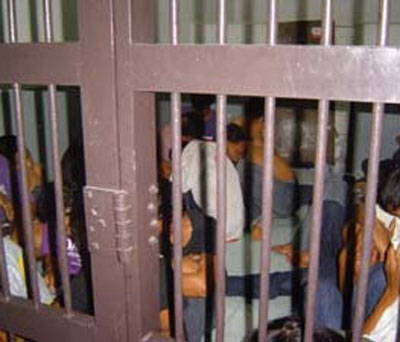
As the possibility arises that Thailand will replace the death penalty with life imprisonment, we turn our attention to conditions of long term imprisonment. On 31st May UCL organised an afternoon conference on prison conditions in Thailand. What follows is a BBC report on the conference.
Prisoners in Thailand kept 'shackled and cramped'
By Vaudine England BBC News, Bangkok
An independent rights group in Thailand, the Union for Civil Liberties, has opened a campaign to improve conditions in Thailand's jails. It has issued a report on prisons which highlights overcrowding, the use of shackles and the lack of medical care. The group has campaigned against the death penalty and praises the government's promise to commute death sentences to life imprisonment.
That makes improving prison conditions even more important, it says.
Thailand's prisons are built to hold about 100,000 people - but according to the government's own figures, they are holding more than twice that number.
As a result, the conditions, says the Union for Civil Liberties, are horrendous.
People have to sleep in tight rows on hard floors. In these sleeping cells, each prisoner has an average of one square metre - as opposed to the four to six square metres described as the minimum by the Council of Europe.
Danthong Breen, chairman of the union, says the overcrowding is shocking.
"In the women's prison it's particularly bad. You have 200 women in a single cell," he told the BBC. "If one of them has to get up at night to go to the toilet, they all shift a bit and when she comes back the space is gone and she has to stand up all night.
"The level of crowding is inhuman and inhumane."
The other horror, he says, is the widespread use of shackles.
These are welded on to the ankles of long-term prisoners and are not removed, even during illness, until the sentence is served.
The United Nations has criticised the practice. The Thai foreign ministry has promised to end it. The constitutional court ruled the practice was wrong.
But the reality of the over-crowding and a ratio of warders to prisoners of about one to 45, makes the practice hard to stamp out.
Prisoners with money are able to improve every aspect of their life behind bars, Mr Breen says. But a lack of government money is holding back investment in new facilities and extra staff.
The civil liberties group suggests Thailand could look more at using non-custodial sentences. It estimates at least half of those jailed are being held for drugs offences.
And it hopes that whatever government emerges from elections next month, the promise to no longer impose the death penalty is kept.

Not revenge, but forgiveness is sweet


Victim of 9/11 hate crime fights for attacker's life
Days after the 9/11 terror attacks, 31-year old laborer Mark Stroman went on a shooting spree in the Dallas area. In a drug-fueled mission of revenge, he killed two South Asian immigrants and shot another — Rais Bhuiyan — in the face at close range, blinding him in one eye.
Shortly after his arrest, Stroman boasted of his role as "Arab Slayer."
Now, as Stroman faces imminent execution in Texas, an unlikely champion is fighting to save his life: Bhuiyan, who spent years recovering from the wounds he suffered in the attack.
"I've had many years to grow spiritually," said Bhuiyan, a Muslim who immigrated to the U.S. from Bangladesh and now works as technology professional in Dallas. "I'm trying to do my best not to allow the loss of another human life. I'll knock on every door possible."Bhuiyan began collecting signatures late last year on a petition asking the Texas Board of Pardons and Paroles to commute Stroman's death penalty sentence to life in prison without parole through his website World without Hate.
Among those supporting his cause are some relatives of the two victims who were killed.
'Unprecedented' The odds are stacked against Stroman, 41, who is held in the Texas State Penitentiary at Huntsville, where he is scheduled to be executed on July 20.
The seven-member Texas Board of Pardons and Paroles holds the power to recommend a commutation to the governor, but it has only done so in one death penalty case since December 2000, when the current Gov. Rick Perry took office. That recommendation was denied by Perry.
By Kari Huus, Canada msn news June 3

Sunday, May 01, 2011

Not in Our Name: Relatives of Victims on Death Penalty

One of the arguments most often quoted in support of the death penalty, in Thailand as elsewhere, is that it is necessary to give justice to relatives of the victims of capital crime. Increasingly these relatives are denying that capital punishment is in their interest, as the following newspaper account relates:

"As the country has increasingly turned against capital punishment as barbaric and horrifyingly prone to legal abuses, defenders are pointing to the emotional needs of the families of murder victims — “co-victims” to those who study crime — as justification. Many family members, however, have said they want no part of that.

When New Jersey abolished the death penalty in 2007 and New Mexico did in 2009, each did so with the support of co-victims. In Connecticut, the Legislature’s joint Judiciary Committee has now approved a bill that would repeal that state’s death penalty, again with the support of victims’ families.

The family members say that rather than providing emotional closure, the long appeals process in death penalty cases is actually prolonging their suffering. They also say it wastes money and unjustifiably elevates some murders above others in importance. In an open letter to the Connecticut Legislature, relatives of murder victims — 76 parents, children and others — wrote that “the death penalty, rather than preventing violence, only perpetuates it and inflicts further pain on survivors.” New York Times, 30th April 2011

Thursday, April 21, 2011

Imprisonment for life without parole


As Thailand moves to abolish the death penalty, there are fears that, following US example, it will replace death by imprisonment for life without parole. The following leads one to doubt the wisdom of imitating US practice:

In the United States, dozens of 13- and 14-year-old children have been sentenced to life imprisonment with no possibility of parole after being prosecuted as adults. While the United States Supreme Court recently declared in Roper v. Simmons that death by execution is unconstitutional for juveniles, young children continue to be sentenced to imprisonment until death with very little scrutiny or review. A study by the Equal Justice Initiative (EJI) has documented 73 cases where children 13 and 14 years of age have been condemned to death in prison. Almost all of these kids currently lack legal representation and in most of these cases the propriety and constitutionality of their extreme sentences have never been reviewed.
Most of the sentences imposed on these children were mandatory: the court could not give any consideration to the child’s age or life history. Some of the children were charged with crimes that do not involve homicide or even injury; many were convicted for offenses where older teenagers or adults were involved and primarily responsible for the crime; nearly two-thirds are children of color.

Monday, April 11, 2011

Death Penalty in Thailand


Current Death penalty Statistics

For all crimes
Sex. Appeal Court. Supreme Court... Juridical Process Complete....Total
Male.....432.............170......................74............................676
Female….46..............24.......................13.............................83
Total....478.............194.......................87...........................759


For drug related crimes
Sex....Appeal Court....Supreme Court....Juridical Process Complete....Total
Male.......183..............42......................59.........................284
Female.....55...............1.......................12..........................69
Total.......220..............62......................71........................353


For crimes of homicide and others
Sex....Appeal Court....Supreme Court....Juridical Process Complete....Total
Male.......249..............128......................15.......................356
Female…....9.................4........................1........................14
Total......258..............132......................16.......................406


Source: Department of Corrections, Bangkok, 30th March 2011

In 2010 the total number of those under sentence of death numbered 708. The increase to 759 is consistent with the 53 reported death sentences in the last year.

Saturday, April 02, 2011

Execution of three Filipinos on drug charges in China


On Wednesday 30th March 2011, three Filipinos, Sally Ordinario-Villanueva, aged 32; Elizabeth Batain, aged 38, and Ramon Credo, aged 42 were executed by lethal injection in China. They were charged with smuggling heroin weighing 4 to 6 kilos into the country. By Chinese law the smuggling of a quantity exceeding 50 grams is subject to the death penalty.
Pleas for clemency made by the President of the Philippines were rejected by Chinese authorities.
In a statement made by a spokesperson of the Chinese government:
"In China, our judicial authorities handled the case independently and we grant equal treatment to foreign drug traffickers. The involved individuals rights and treatment are ensured and safeguarded according to the law. China has fulfilled its international obligations in the process.”
This is not so. In international law the death penalty may be inflicted only for the most serious crimes which is interpreted as intentional homicide. The UN Human Rights Council has insisted that drug related crimes do not come under the ambit of “most serious crimes”.
China must not deny the experience of most countries in the world, nor the shared moral sense of the majority in rejecting the death penalty

The three executed were drug mules recruited by foreign drug syndicates preying on jobless Filipinos, not professional drug dealers. In one of the cases there is doubt that the carrier was aware of the nature of the carried package. They appear to have been first time offenders.
They carried the drugs through an ineffective surveillance in Manila International Airport, a process which must be investigated.

The three condemned Filipinos were allowed to meet with their families for one hour before execution. One of the three was unaware that the visit was a prelude to her execution, and her family tried to hide from her the significance of their visit.

The drug trade is the largest crime problem in the world and cannot be solved by the death penalty. The Chinese government should study the case of Hong Kong where the death penalty has not been used in 40 years and where the drug problem is no different than in the comparable city of Singapore, which surpasses even China in its rate of execution per population unit (Evidence may be found on an earlier posting on this blog: See Archives; December 2008)

Many other Filipinos are under death sentence in China and elsewhere. The death penalty has been abolished in the Philippines for the last nine years.
13 Thai women are awaiting execution on drug charges in China